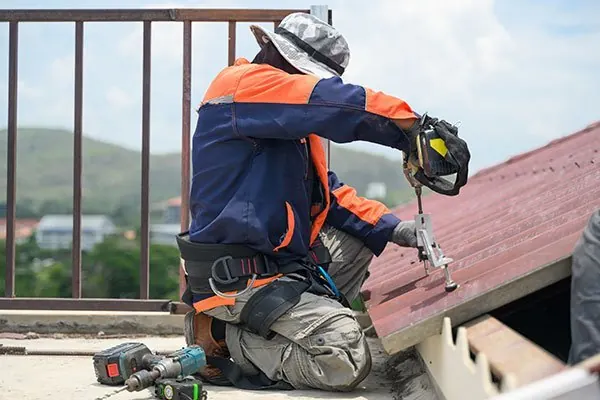
Roof repairs from Caloundra to Noosa
Roofer Sunshine Coast arranges roof repairs on houses, units and small commercial buildings across the Sunshine Coast. The work is done by independent local roofing contractors and covers tile roofs, Colorbond and other steel roofs, and low-pitch roofs over extensions and patios. Every repair starts with an inspection, because guessing at the cause of a leak is how people end up paying twice.
Repairs roofers do most often here
- Leak tracing. Following the water from the ceiling stain back up through the roof space to where it actually enters.
- Cracked, slipped or porous tiles. Swapping damaged tiles and re-seating ones that have moved after wind or foot traffic.
- Ridge and hip capping. Re-bedding and re-pointing caps that have loosened, which is often where tile roofs start to let in wind-driven rain.
- Flashings. Re-sealing or replacing flashings around chimneys, walls, skylights, vent pipes and solar mounts, especially where old silicone has perished.
- Rusted sheets and fixings. Replacing corroded screws, short lengths of sheeting and rusted lap joints on steel roofs.
- Valleys and gutters. Clearing and re-sealing valley irons, and fixing gutters that overflow back into the eaves.
- Storm damage. Securing lifted sheets, refixing ridge caps and making a roof watertight after a storm cell.
Why coastal roofs leak in particular ways
Summer storms on the Sunshine Coast drop a lot of rain in a short time, frequently on a strong wind. That combination tests the weak points of a roof all at once: the laps between tiles, the edges of flashings, the ends of sheets and the capacity of gutters and valleys. Add salt air, which shortens the life of fixings and flashings near the beaches, and high humidity, which encourages lichen and moss that hold water against tiles, and it is easy to see why the first big storm of the season brings a rush of calls.
Is the roof worth repairing?
For most roofs the answer is yes. A roof with sound tiles or sheets and a few failed details can keep going for many more years once those details are fixed. The question changes when leaks keep appearing in new places, when steel is rusting through rather than just at the fixings, or when tiles are soft and break as the roofer walks on them. A good contractor will say so plainly and show you photos, and our article on when repairs aren't enough covers the warning signs.
If the inspection points toward a new roof, the next stop is residential roof replacement, and the cost guide gives 2026 planning ranges for both repairs and replacement.
What you can do before the roofer arrives
Keep off the roof. Move furniture and valuables away from drips, put a bucket under the leak and, if water is pooling above a ceiling, keep people out of that room. Take photos of the stain, the ceiling and any visible roof damage from the ground, and note which way the wind was blowing when it leaked. That information shortens the inspection and helps an insurer if you make a claim.