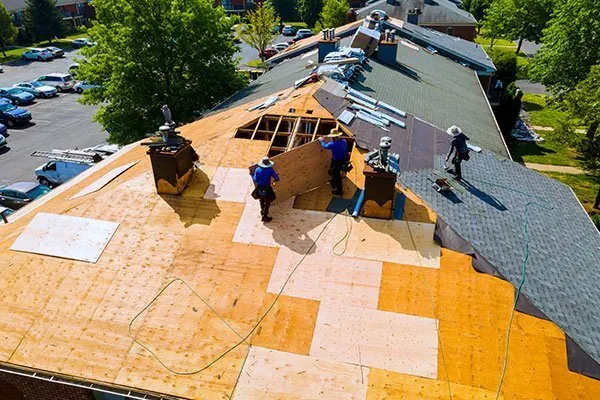
Replacing a house roof on the Sunshine Coast
Residential roof replacement means taking the old roof off down to the rafters or trusses, fixing whatever is wrong underneath, and building a new roof on top. Roofer Sunshine Coast lines this work up with independent local roofing contractors for detached houses, duplexes and townhouses from Caloundra to Noosa, whether the new roof is steel or tile.
When replacement is the right call
Replacement makes sense when the roof is failing as a whole rather than in one spot. Common signs on coastal houses include leaks appearing in a new room every wet season, rust that has eaten through sheets rather than sitting on the surface, concrete tiles that have lost their surface and absorb water, battens that have sagged or rotted, and a roof of fibro or corrugated asbestos cement that is cracking. Our list of signs you need a roof replacement goes into each.
What a full replacement involves
- Inspection and scope. The contractor checks the roof covering, the roof space and the frame, measures up and writes the scope.
- Approvals. If the work needs building approval, a private certifier or council is involved before work starts.
- Set-up. Edge protection or scaffold goes up, bins arrive and the site is protected.
- Strip-off. The old roof comes off in sections. Asbestos is removed first by a licensed removalist where it is present.
- Frame and battens. Rotten or damaged timber is replaced and battens are fixed to suit the new roofing.
- Sarking or blanket. A membrane or insulated blanket goes down to manage condensation, heat and wind-driven rain.
- New roof. Sheets or tiles are laid and fixed, then ridges, hips, valleys and flashings are finished.
- Gutters and handover. Gutters and downpipes go on if included, the site is cleaned and you get the paperwork.
Building the new roof for the coast
A new roof here has to handle more than rain. Salt air near the beaches calls for steel with a coating grade suited to marine exposure and fixings to match. Humid roof spaces need sarking or a blanket and a path for warm air to escape. Summer storms demand gutters and valleys sized for heavy downpours and tie-downs matched to the site's wind classification. In bushfire-prone parts of the hinterland, materials and ember sealing may be governed by the site's bushfire attack level. None of these choices should be left to the last day.
Tiles or steel?
Most owners end up choosing between new concrete or terracotta tiles and a Colorbond steel roof. Steel is lighter, quicker to install and suits low pitches. Tiles keep the look of many established streets and are quieter in rain. Our Colorbond vs tile guide and the tile roof replacement page cover both, and the cost guide has planning prices.
Your part in a smooth job
Clear the perimeter of the house, move cars off the driveway, empty valuables from the roof space and let neighbours know dates. Our article on what to expect during a roof replacement covers the practical side in detail.